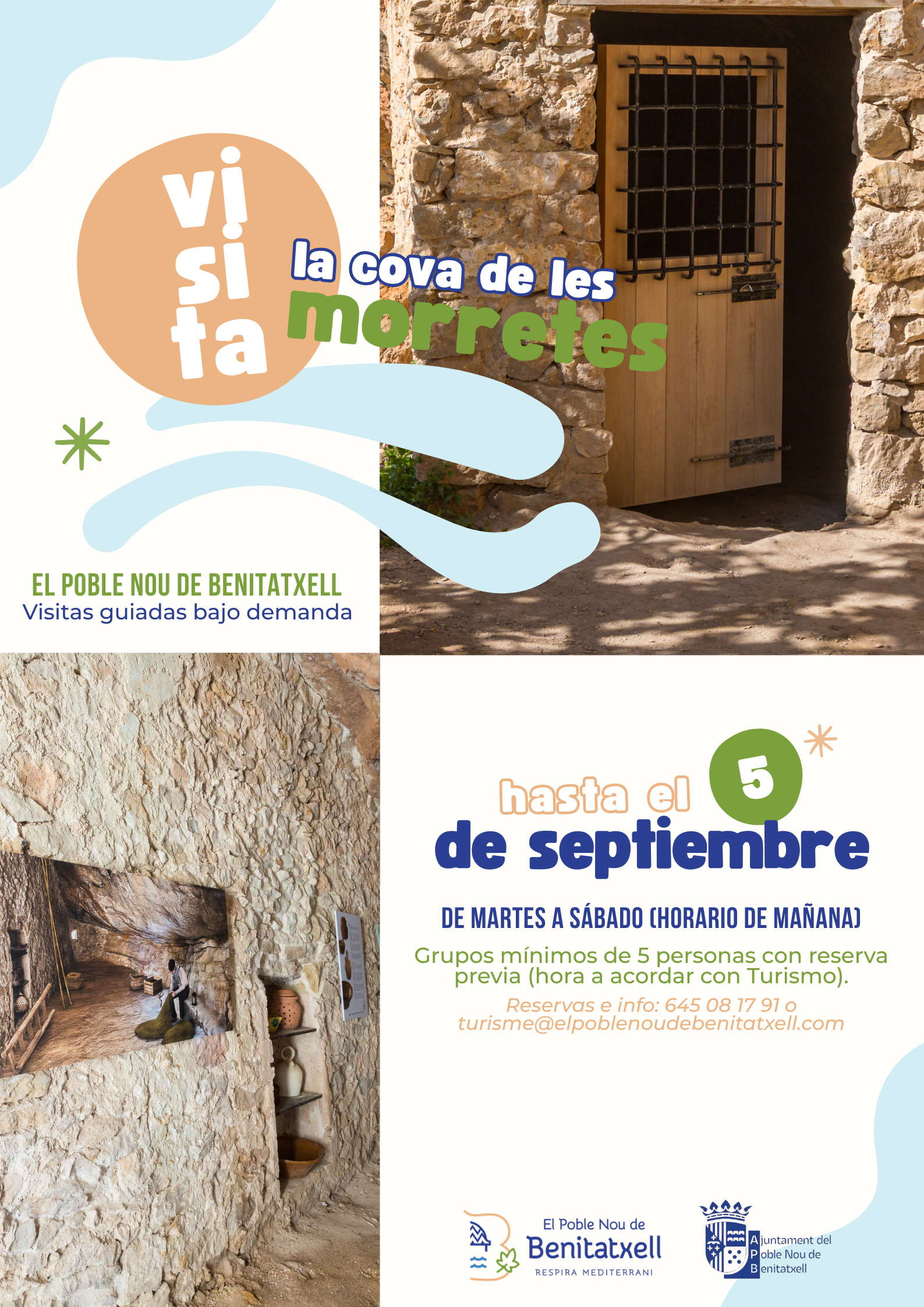


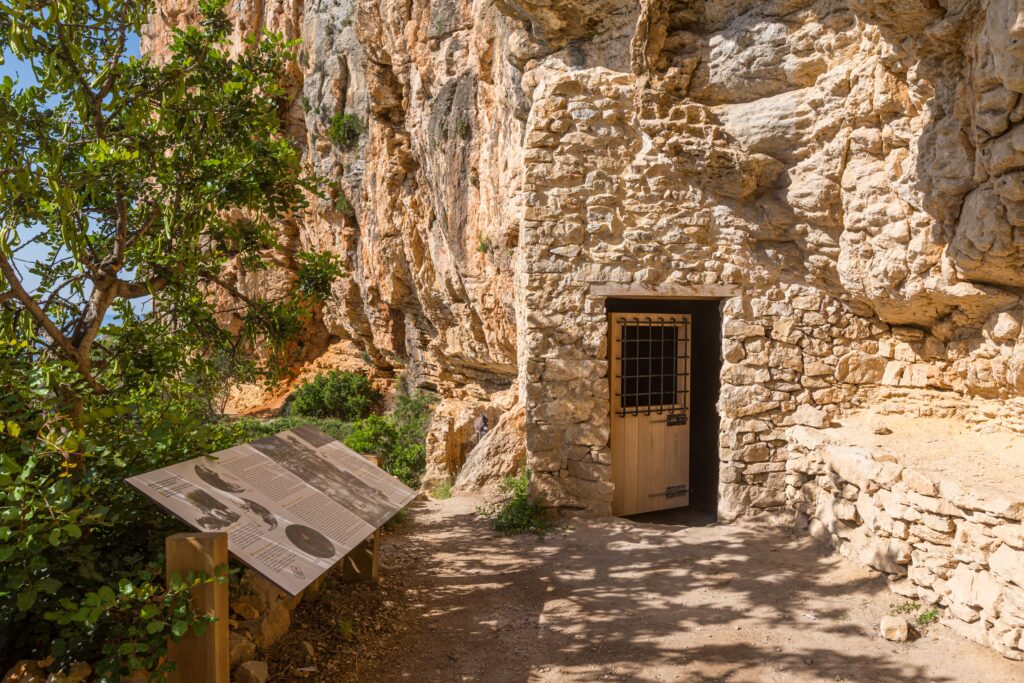
Nestled on the Route of the Cliffs and over the Mediterranean Sea, the cave of Les Morretes keeps within its stone walls the stories of the people who made this cavity their home and refuge. For decades, it was a refuge for fishermen, farmers who worked the adjoining land and smugglers who took advantage of the orography of the coast to hide their merchandise.
Now, the Council of El Poble Nou de Benitatxell, through the Department of Tourism, has launched a programme of guided tours to publicise this ethnological space, today converted into a museum in front of the sea.
The guided tours will be available until September 5th, from Tuesday to Saturday in the morning (with the exact time to be specified with the Tourist Office), under the modality of visit on demand for groups of a minimum of 5 people. It is essential to book in advance by calling or sending a WhatsApp to 645 08 17 91 or writing an email to turisme@elpoblenoudebenitatxell.com.
A museum integrated into nature
The Cova de les Morretes thus culminates an ambitious recovery and enhancement project that began at the end of 2022. After the consolidation of the structure and restoration of elements such as the stable and a large communal outdoor kilt, the action recently concluded with the installation of interpretive paneling financed by the Tourism Sustainability Plan in Destination (financed with European Next Generation EU funds).
During the first phases of archaeological excavation and restoration carried out in 2023, an extraordinary discovery came to light: a nineteenth-century treasure made up of 67 Spanish coins (dated between 1869 and 1879), probably hidden by smugglers of the time.
This museographic intervention not only explains the domestic use and daily life inside the cave, but also honours the memory of the encesers and the Pesqueres de Cingle. In addition, special emphasis has been placed on universal accessibility: the panels include realistic illustrations of great didactic value, texts in Valencian and Spanish, digital link to content in English, as well as an inclusive panel with easy reading, pictograms, Braille system and a relief plan.
The Department of Tourism encourages both residents of the town and the region as well as visitors to enjoy this initiative. As highlighted by the councillor of the area, Víctor Bisquert, «it is a unique cultural experience that combines the majestic landscape of our cliffs and coves with the dissemination of the historical and ethnological legacy of El Poble Nou de Benitatxell, allowing us to value the memory of our ancestors in an incomparable environment».
Likewise, the project has a vocation for long-term continuity. After the month of September, the on-demand visit service will continue to be active throughout the year with the goal of deseasonalising the tourist offer and attracting groups of schoolchildren, associations of retirees and groups of all kinds. In addition, the department is already working on the creation of a dramatised route that will allow visitors to relive in an even more immersive way the stories and legends that this place hides.