


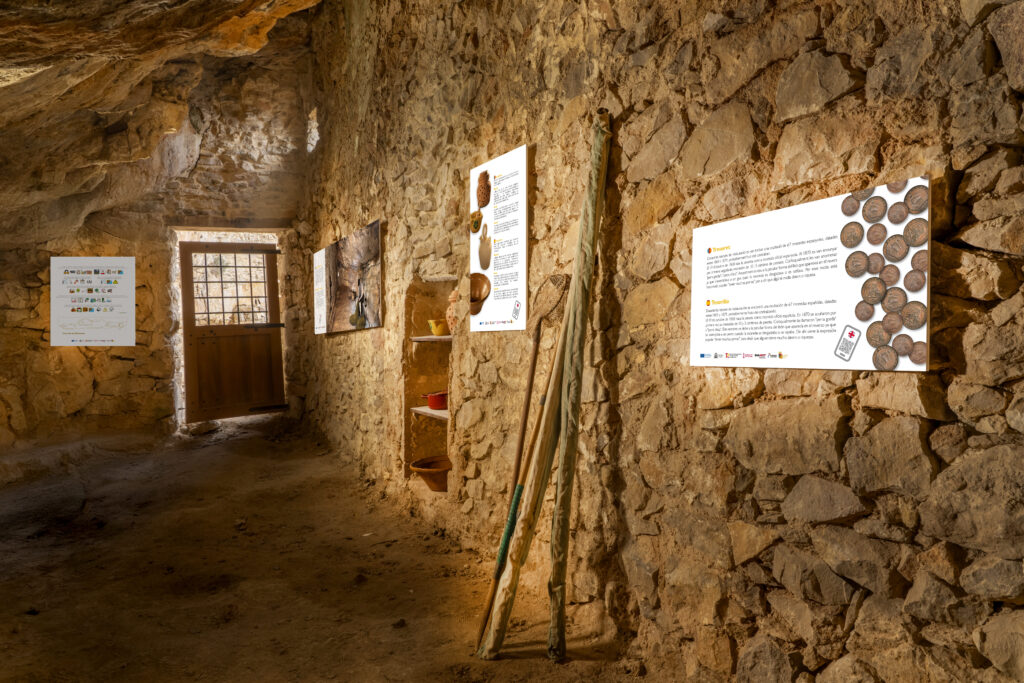
Now it is official. Following the recent completion of the installation of interpretive panels, Cova de les Morretes can now be considered a museum by the sea, commemorating the history of the caves on the cliffs of El Poble Nou de Benitatxell, which were once a refuge for smugglers, fishermen and farmers.
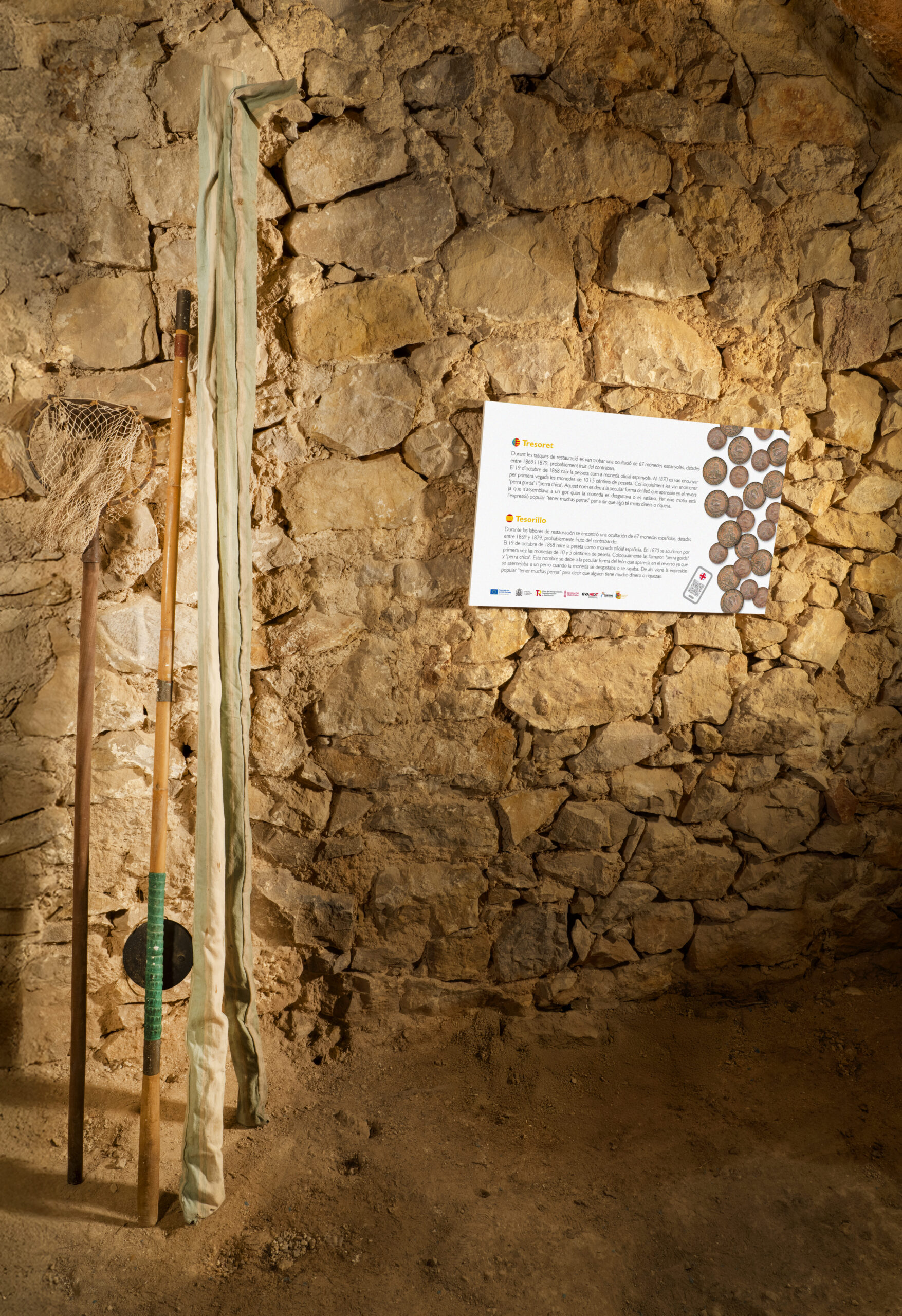
The project to turn this cave into a museum, which has involved several phases of restoration and enhancement, began in late 2022. During the initial restoration work in 2023, a treasure trove from the Nineteenth Century was discovered, consisting of 67 Spanish coins dating from between 1869 and 1879, probably the result of smuggling. Later, in 2024, a large outdoor oven was restored.
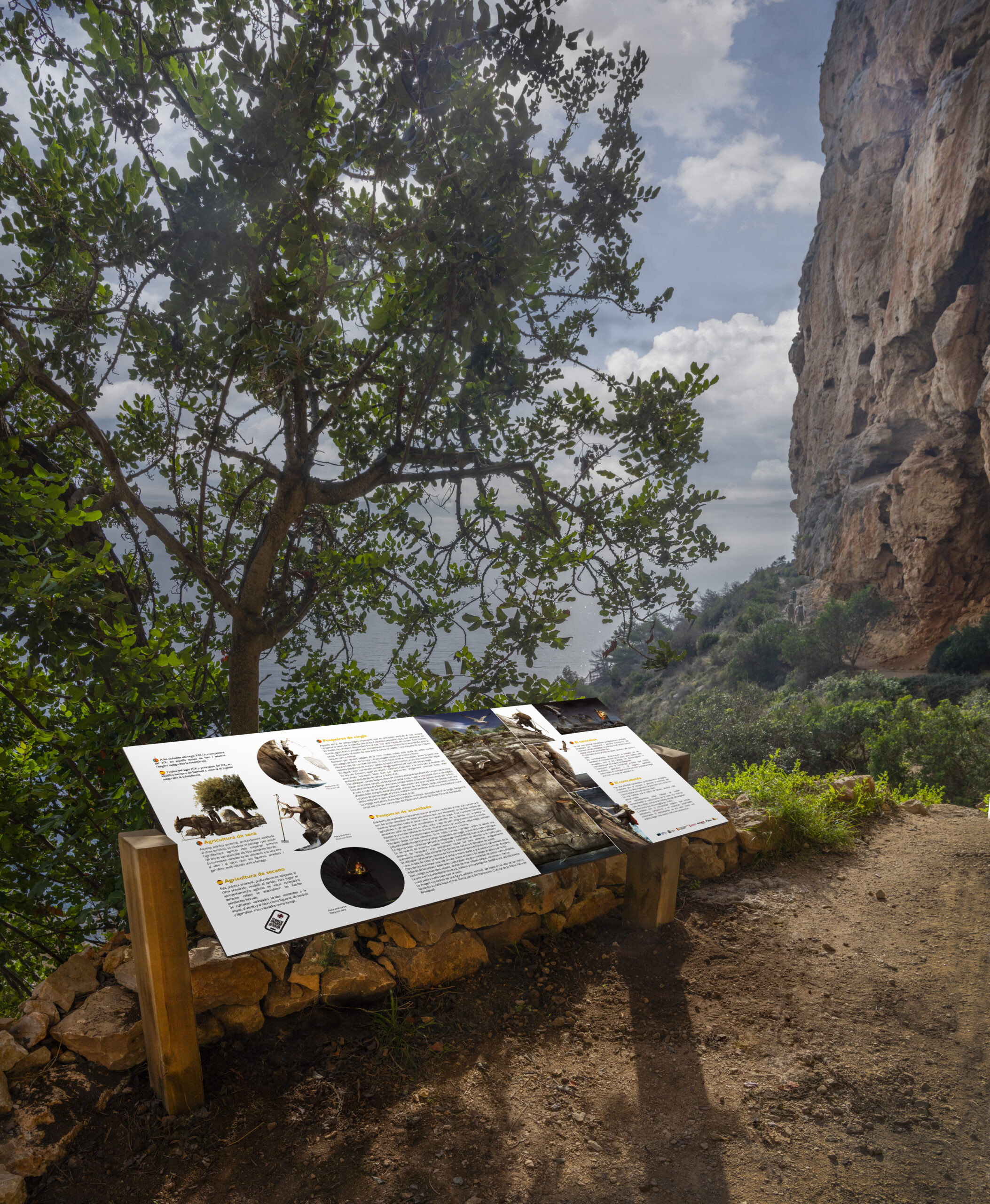
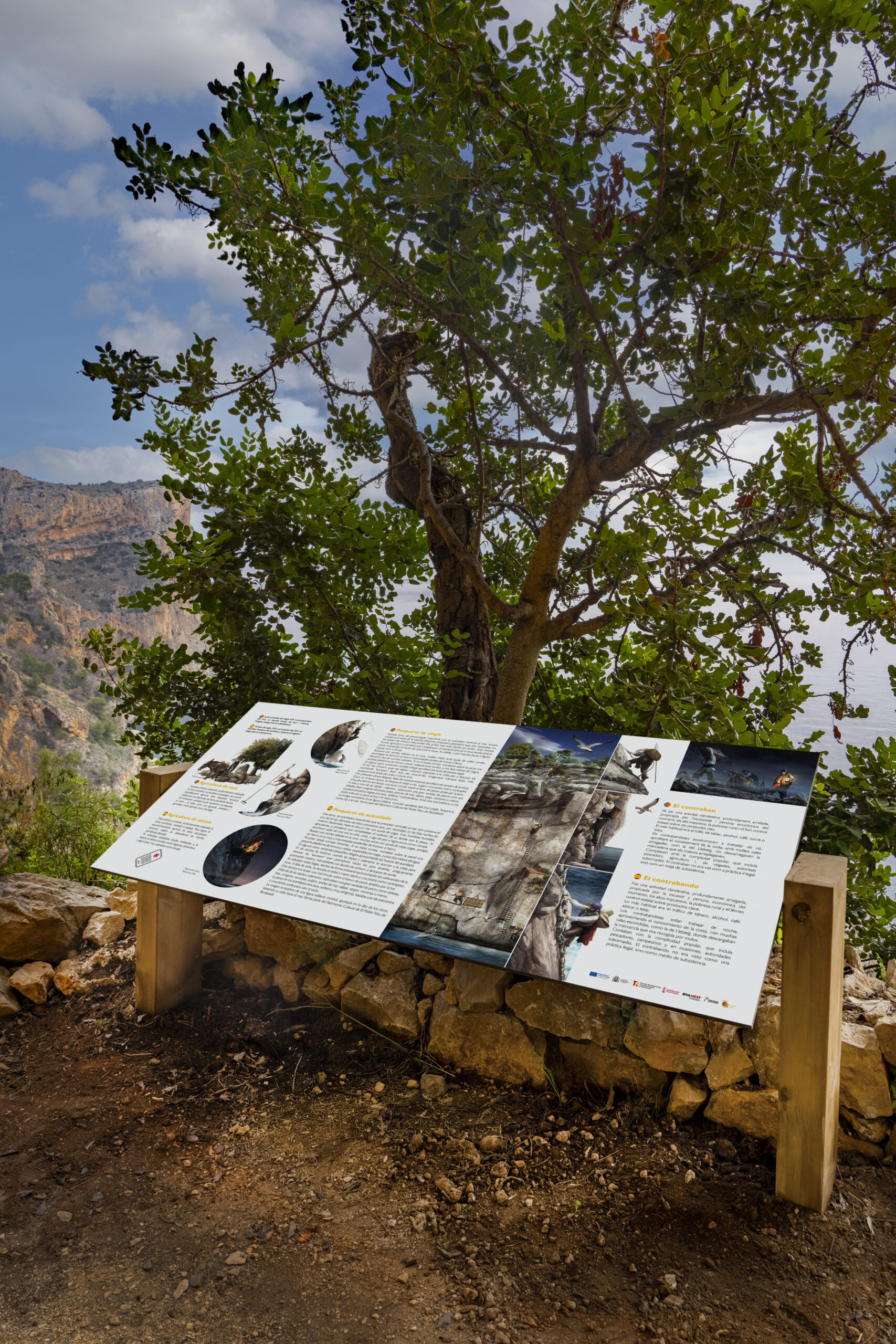
This latest installation of panels, financed with €18,000 from the Tourism Sustainability Plan (Recovery, Transformation and Resilience Plan, PRTR, financed by the European Union), gives solidity to this museum with views of the Mediterranean, emphasising the historical activities linked to the interior of the cave, the stable and the oven, as well as the traditional fishing activity carried out in the “Pesqueres de Cingle”.
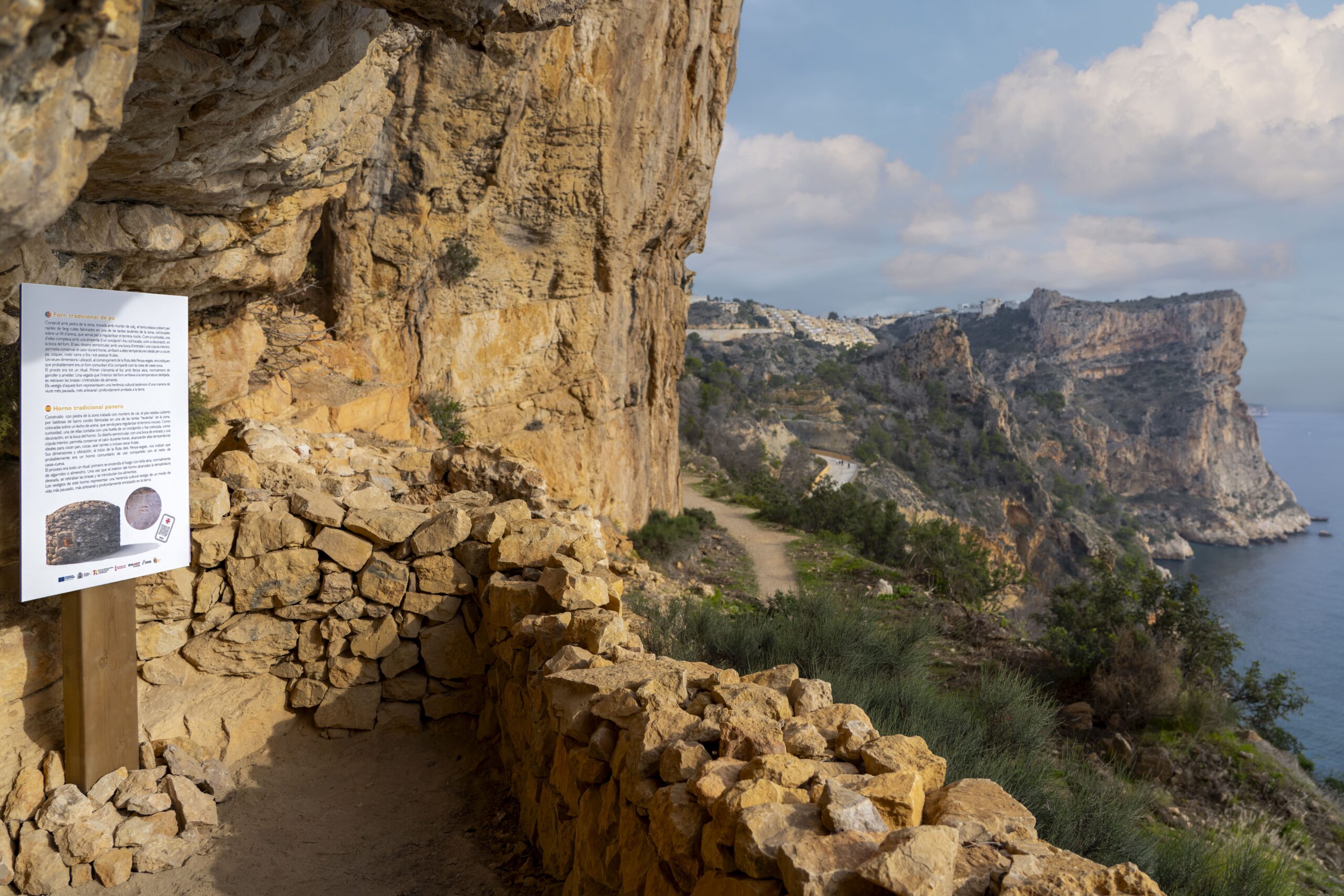
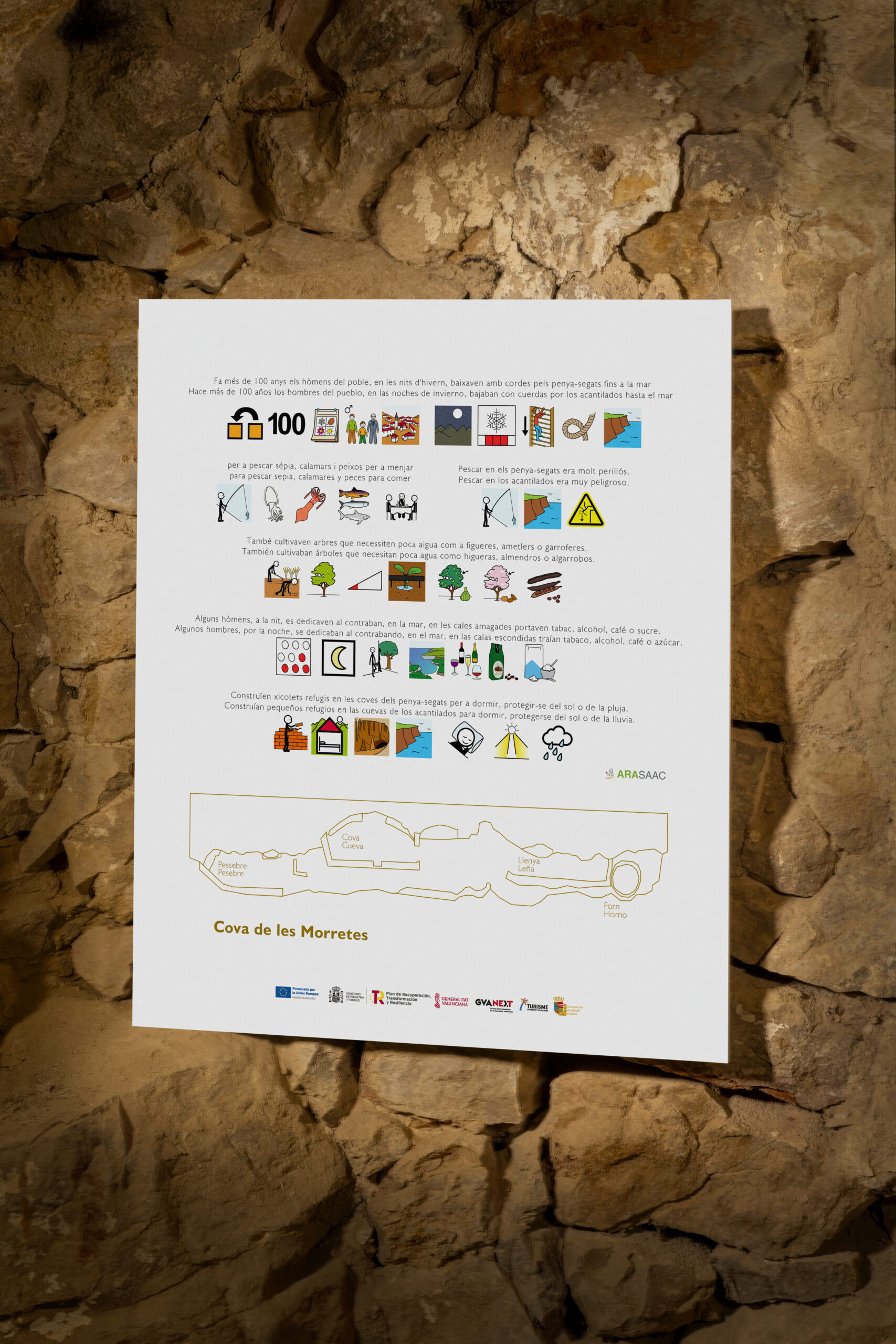
One of the most costly aspects of the project has been the production of graphic material. It was decided to create original and realistic illustrations based on all the information gathered, with the objective of making the content easily understandable for all types of audiences. In terms of accessibility, the panels can be read in Spanish and Valencian, and content in English is available via a digital application. In addition, an inclusive panel has been incorporated that describes the cave and its activities using easy language, pictograms, Braille and a tactile map.
The texts and explanations have been prepared from various sources, including specialist publications on the fishing grounds of Benitatxell and Xàbia, such as “Nits de Tinta” and “Les pesqueres de cingle a la Marina Alta”, audiovisual documentaries, and knowledge provided by local residents and municipal staff.
‘The interpretive panel project at Cova de les Morretes is a fundamental step in the dissemination, conservation and enhancement of this historic site, combining historical rigour, technical quality and universal accessibility,’ said Councillor of Patrimony, Víctor Bisquert, who announced that work is already underway to organise guided tours in the future to raise awareness of its valuable history.
A settlement of smugglers, fishermen and farmers
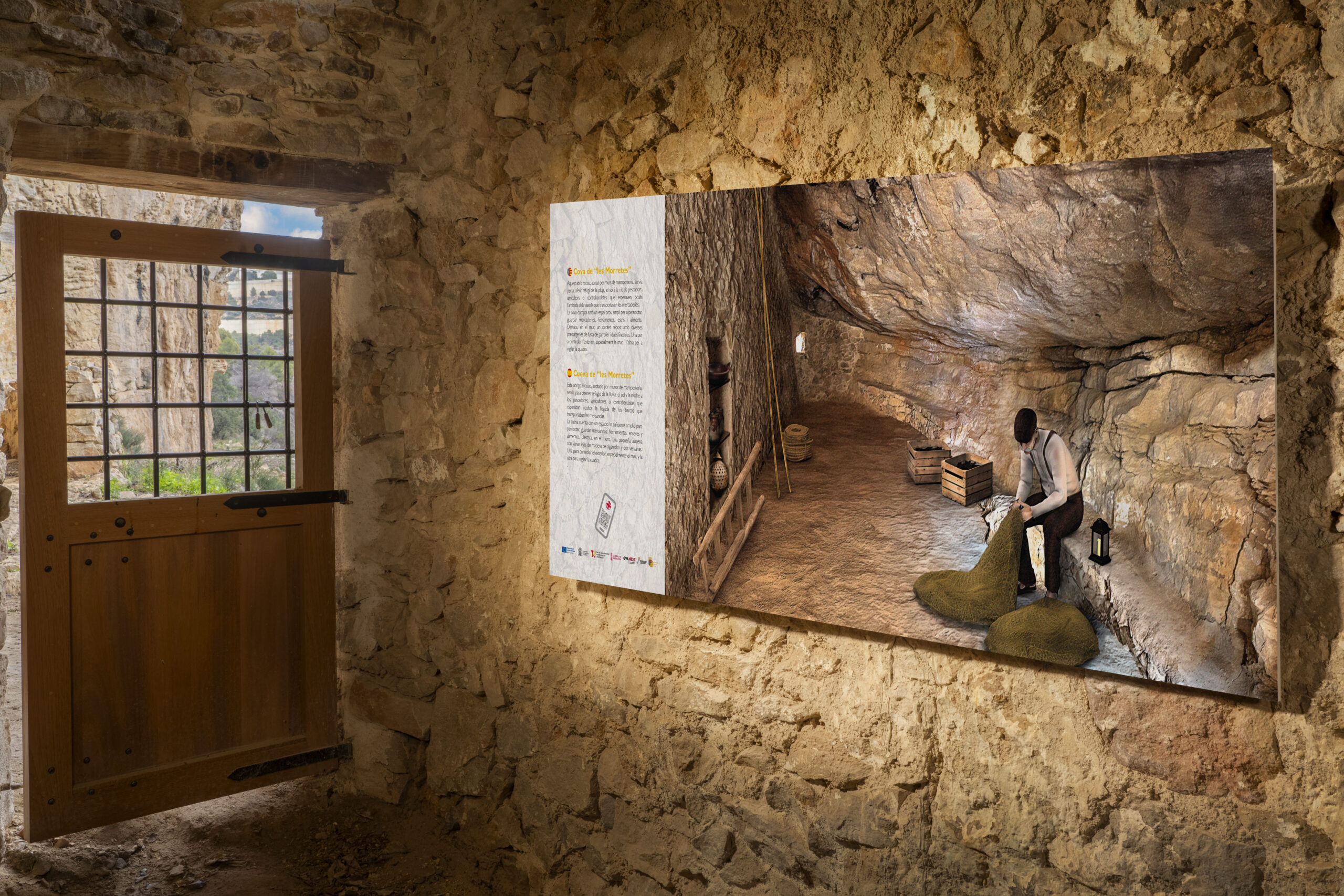
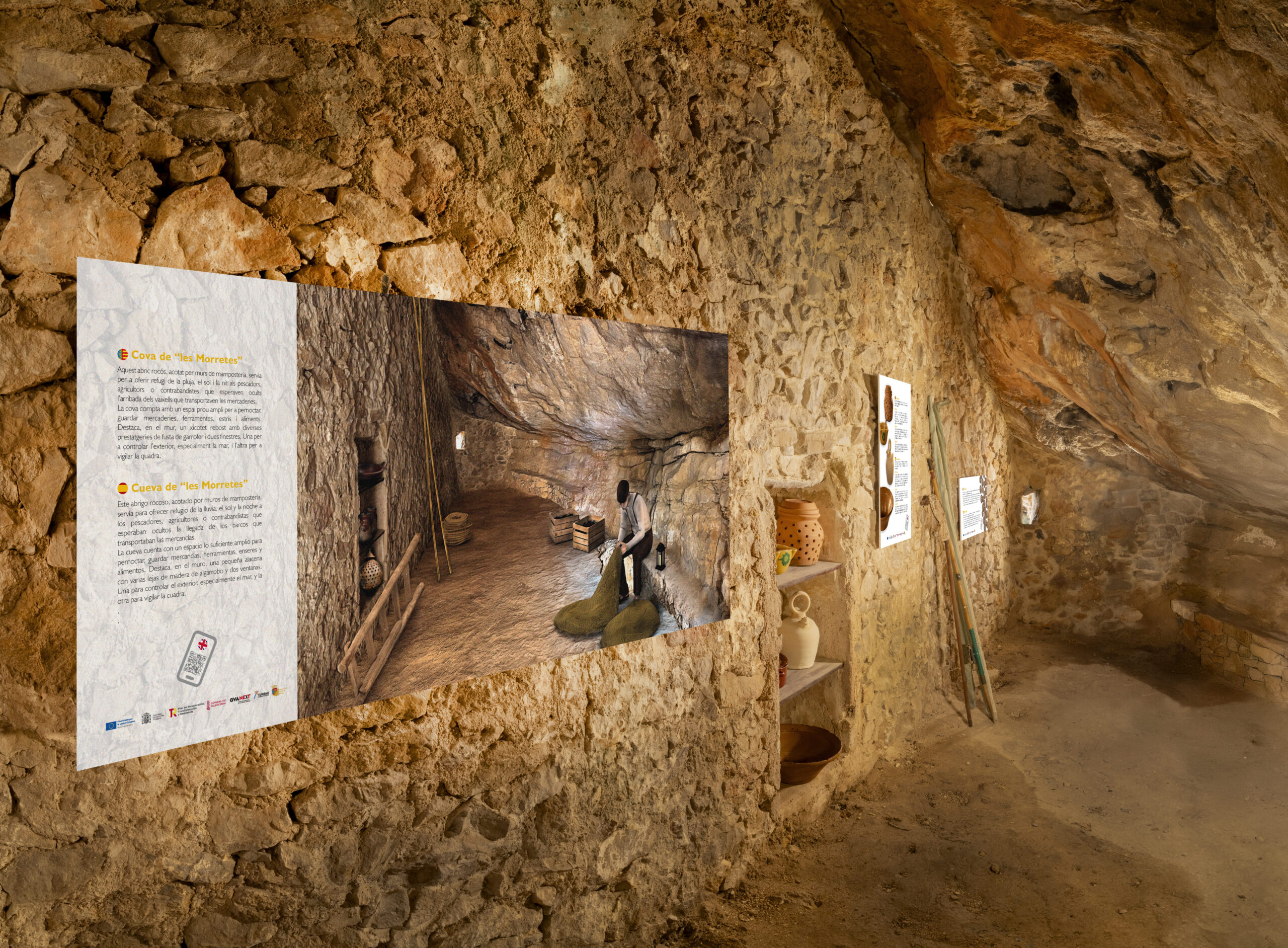
The rocky shelter that makes up this cave, located on the well-known Benitatxell Cliff Route and enclosed by masonry walls, served as a refuge from the rain, sun and night for fishermen, farmers and smugglers who, in centuries past, waited in hiding for the arrival of ships carrying goods.
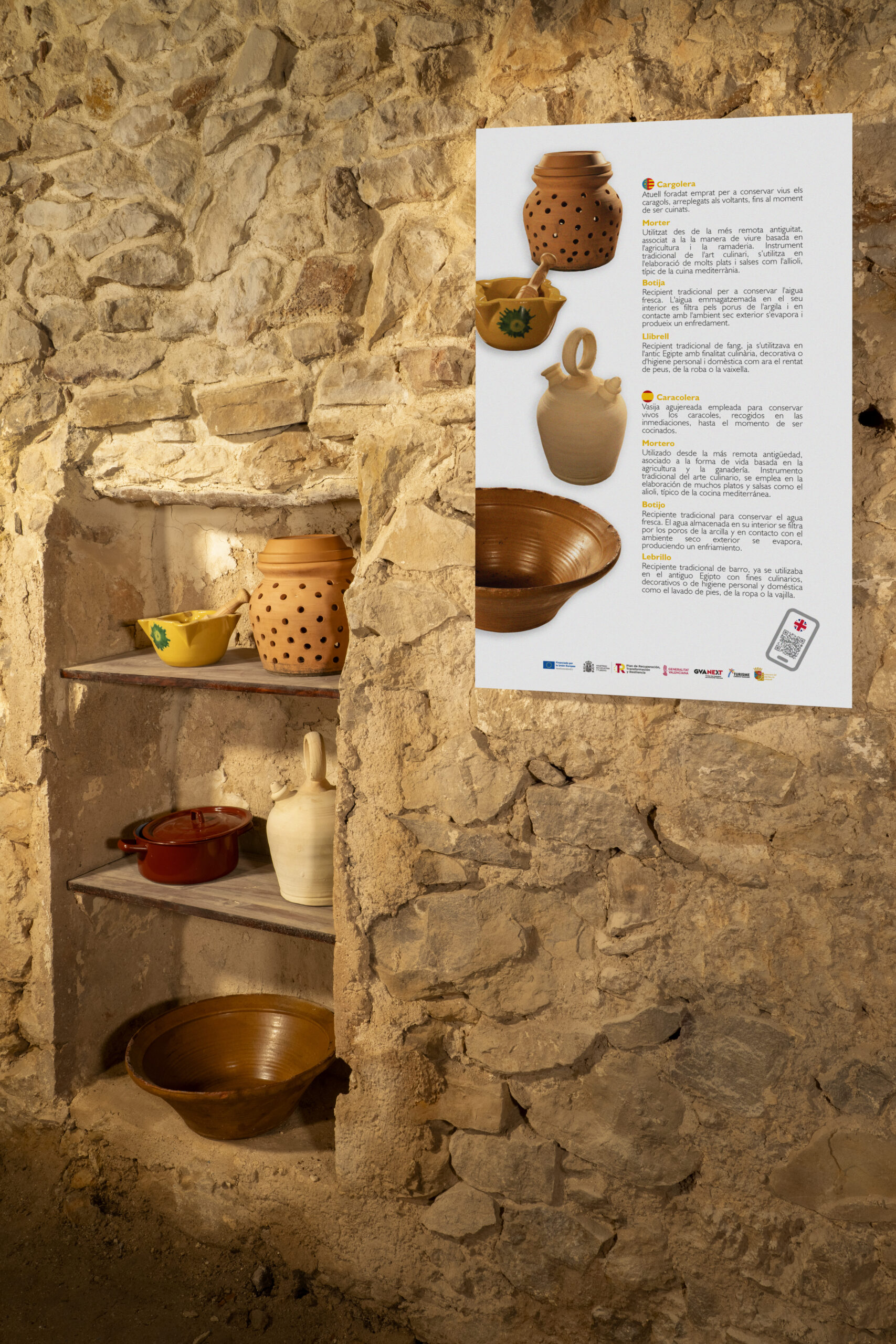
The cave is large enough to spend the night, store goods, tools, equipment and food. On the wall, there is a small cupboard with wooden shelves made of carob wood and two windows.
Smuggling was a clandestine activity, deeply rooted, fuelled by the scarcity and economic hardship of the time, high taxes, rural poverty and strict state control over key products. The most common items smuggled were tobacco, alcohol, coffee, sugar and fabrics.
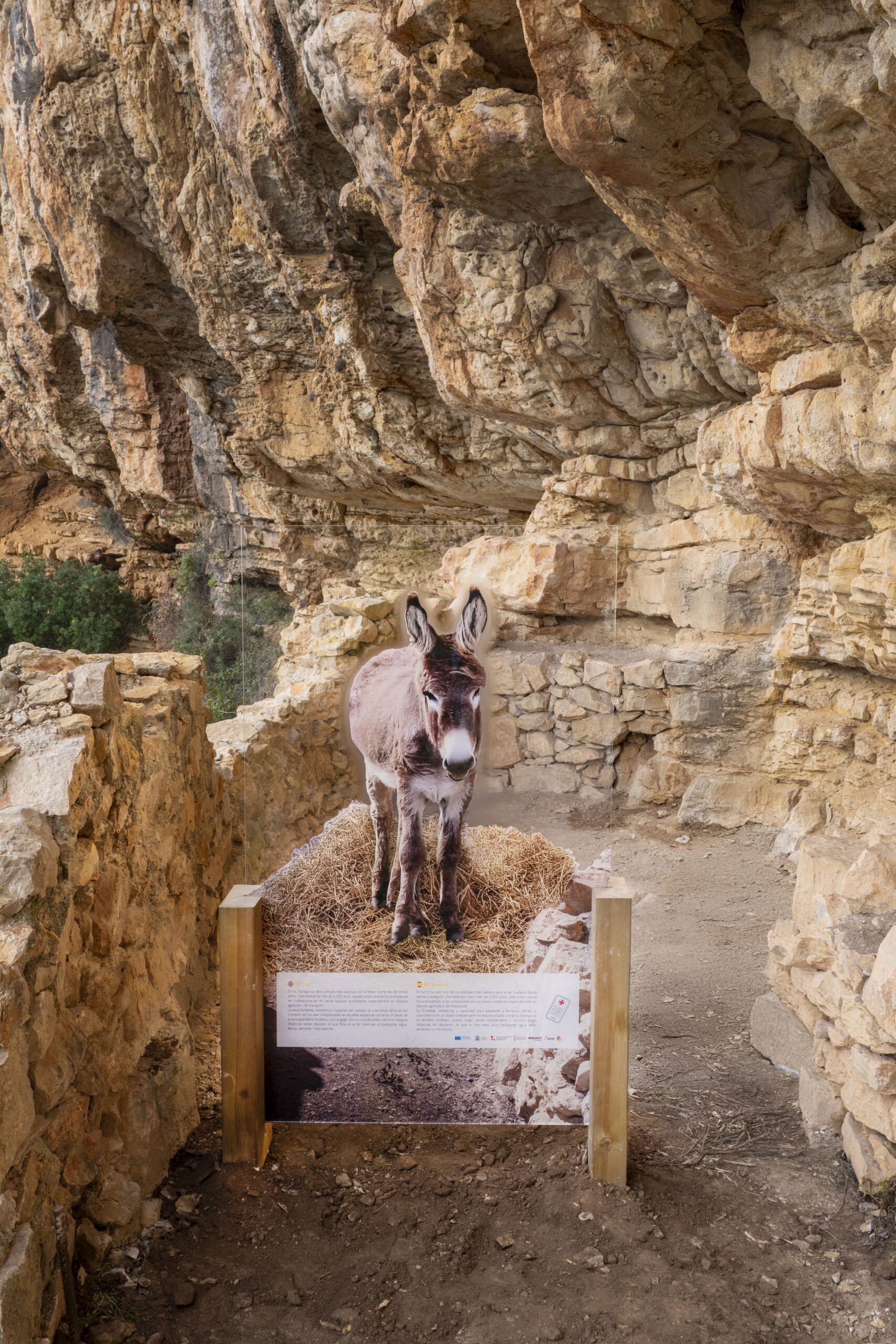
Smugglers usually worked at night, taking advantage of their knowledge of the coastline, with its many hidden coves, such as Llebeig, where they unloaded their goods, which were then collected by mules. They enjoyed the complicity of the local population, including fishermen, farmers and, on occasions, bribed authorities, as smuggling was not seen as an illegal practice, but as a means of subsistence.