- The tourism project launched last summer is expanding its content in response to high demand, offering guided meditation audio recordings and a landing page in two new languages
For years, El Poble Nou de Benitatxell has positioned itself through various tourism campaigns as a municipality offering rest, peace and tranquillity, in contrast to the overcrowding suffered by other tourist destinations in the area. Last year, the Tourism Department went one step further by launching the “Tourism to breathe” project, which, in response to high demand, is now expanding its borders by offering all its content in English and French, in addition to the original Valencian and Spanish.
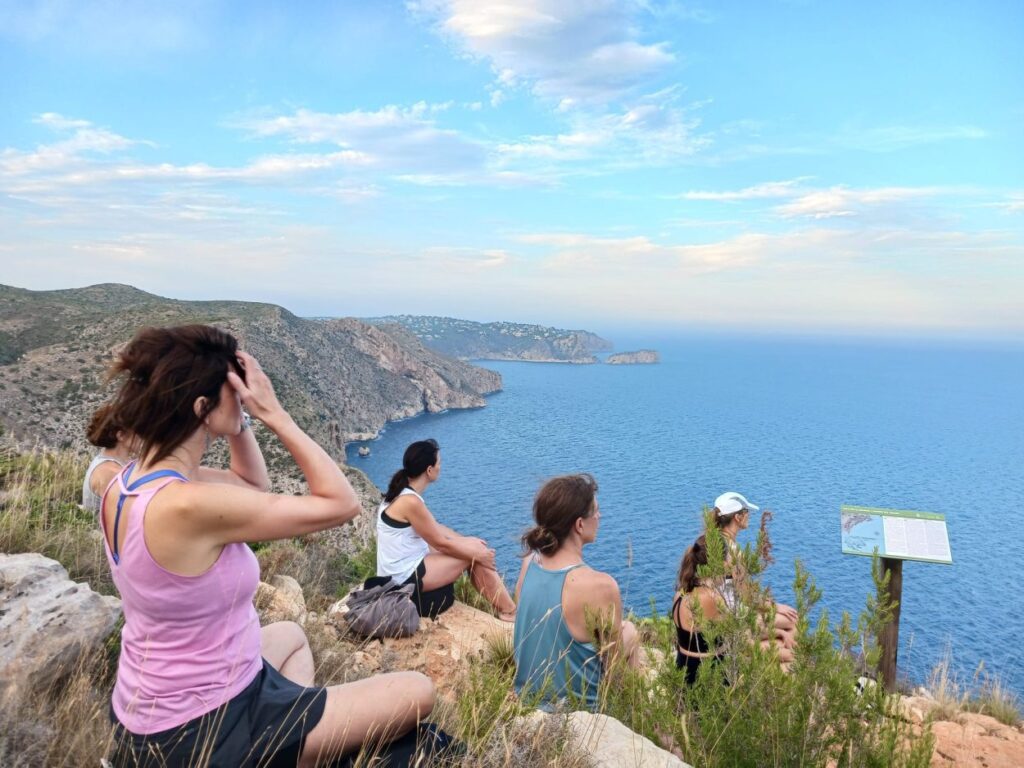
This tourism project, which is the alma mater of other initiatives such as the cycle of free meditations, yoga postures and body awareness exercises “Respira l’estiu” (Breathe the summer) that is being carried out during this season, offers another way to enjoy holidays at the Costa Blanca. Through the landing page turismeperarespirar.com, five guided meditations are available to residents and visitors to enjoy the charm and calm of five locations in the municipality: the Portalet viewpoint, Moraig cove, Morro Roabit, Les Fonts park and the Abiar wells.
In each of these urban environments and natural settings, there is a stand with a QR code. The website provides information about each location and allows users to listen to a meditation session created specifically for that place. These meditations, initially available in Valencian and Spanish, can now also be listened to in English and French. They can be accessed via Spotify and YouTube.
The meditations begin with an introduction explaining the aim of “Tourism for breathing” and a brief presentation of the environment. Each meditation practises mindfulness through different content: breathing, sensations, thoughts, emotions, compassion, or contact and connection with nature.
Although these meditations are intended for visitors and mindfulness practitioners to get to know the municipality and practise meditation in situ, “Tourism for Breathing” allows meditation to be practised remotely and is ‘a tool for Benitatxell to reach many meditation practitioners in a different way, through unique and exclusive meditations in the town,’ said the councillor of the area, Víctor Bisquert.
In Bisquert’s words, «this resource not only seeks to promote a different kind of tourism, far from crowds and in connection with nature, but also links meditation to an ethical component that is also necessary to introduce into current tourism. The intention is to seek not only personal well-being but also that of the place being visited, protecting and not damaging the cultural and natural patrimony of the destination and respecting the way of life of the local population, taking into consideration their language, traditions, customs and peaceful way of life.»