


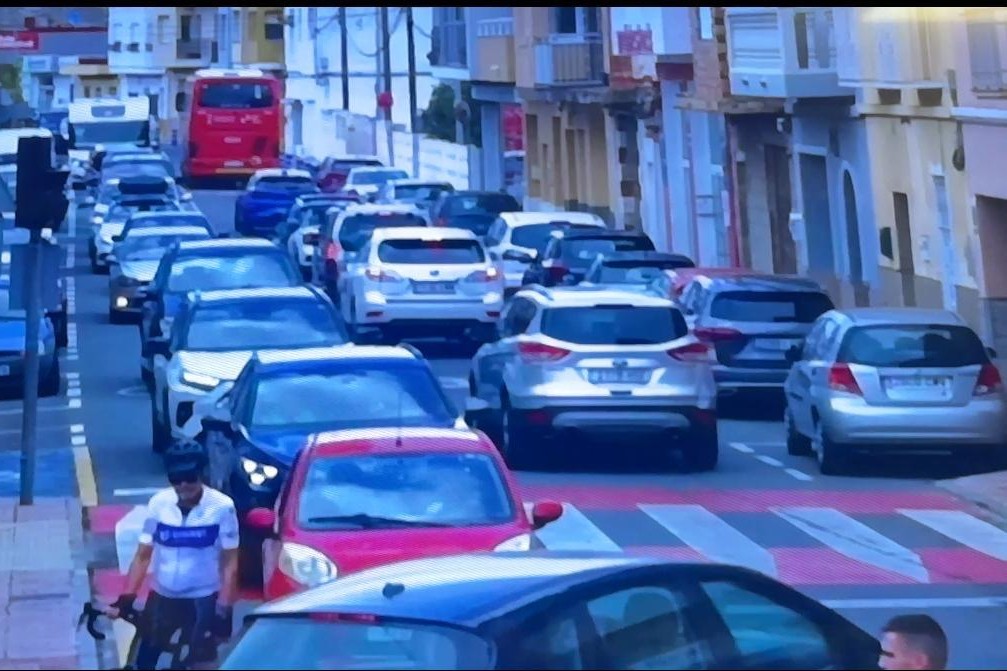
El Poble Nou de Benitatxell suffers from traffic congestion that seriously affects mobility, road safety and the quality of life of its residents. More than 32,000 vehicles pass through its town centre every day on the CV-740 and CV-737 provincial roads, generating traffic pressure that is incompatible with its urban structure and the principles of sustainable planning.
Between June, 12th and July, 13th, 2025, traffic cameras recorded a daily average of 15,000 vehicles from Xàbia, 9,000 from Moraira and 8,000 from Teulada. This intensity far exceeds the technical capacity of roads inserted into a consolidated environment.
This volume of traffic, according to standard planning criteria, requires structural measures such as ring roads or bypasses. In similar municipalities, traffic flows of this magnitude have led to the construction of circular roads to divert through traffic away from the town centre. In the case of Benitatxell, the lack of alternative routes has for years concentrated traffic from outside the municipality, turning its streets into a provincial through road.

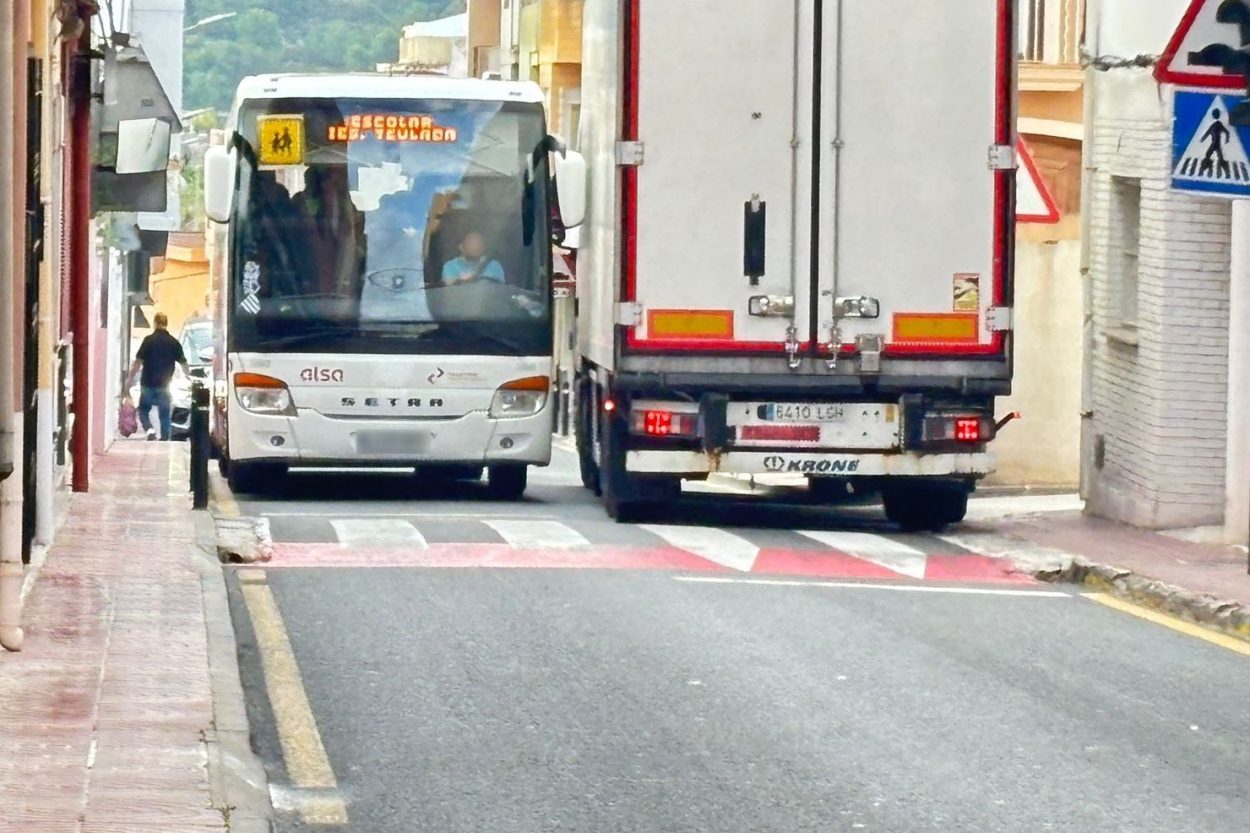
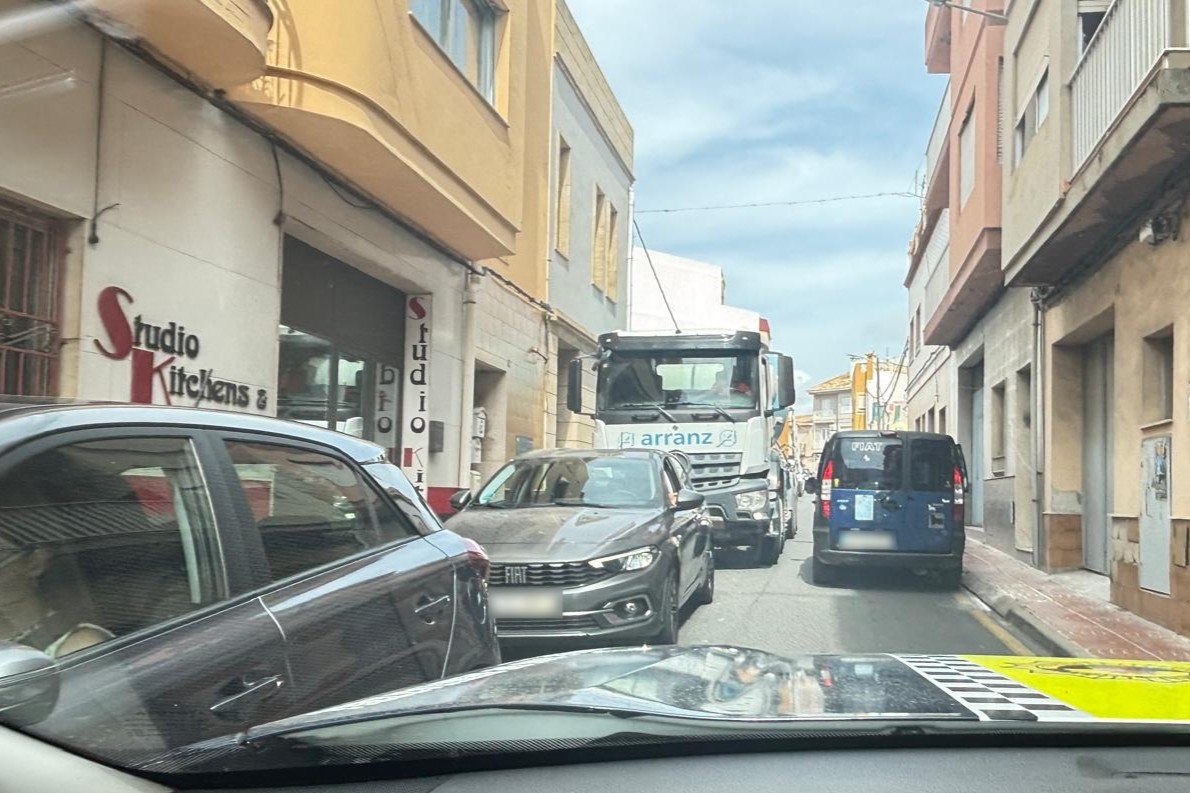
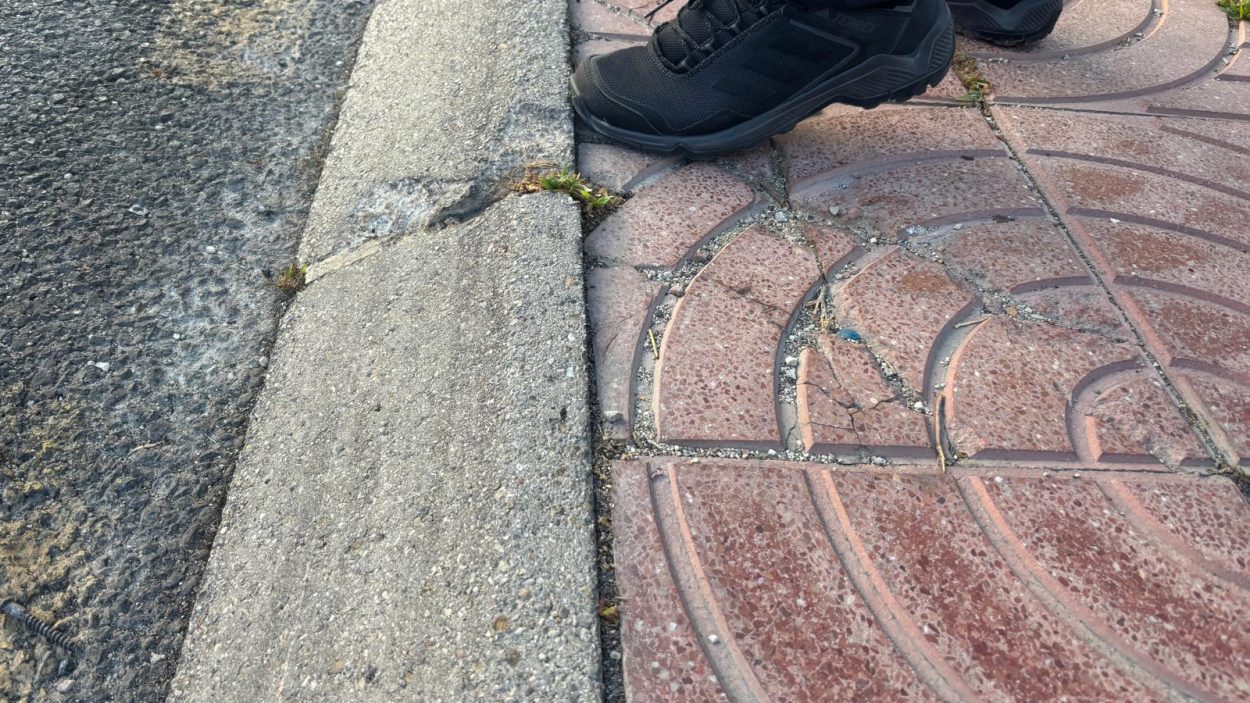
One of the most critical sections is located on Padre Plácido Street, where the road is only 4.5 metres wide in both directions, which not only makes it difficult for vehicles to pass each other, but also prevents safe coexistence with pedestrians. Added to this there is the narrowness of the pavements, which in many places are less than 0.75 metres wide, insufficient to guarantee the minimum accessibility and safety conditions set out in state and regional regulations.
This road runs just a few metres from Santa María Magdalena Primary School, which means it cannot be considered a safe route to school. The daily traffic of heavy vehicles next to a school, combined with the lack of passable pavements, forces families to choose longer routes, but at least these offer a minimum of protection for their children.
Recently, security cameras captured an accident that could have ended in tragedy: a vehicle crashed into a building just seconds after a pedestrian crossed at that same spot. It was luck, not safety conditions, that prevented a fatal outcome.
Another critical factor is the difficulty of emergency services to get through. Not infrequently, traffic jams have delayed the arrival of ambulances, fire brigades or security forces, compromising the care of people in life-threatening situations, whether due to accidents, health incidents or fires.
In addition, high traffic density generates significant levels of noise, polluting emissions and congestion on a sustained basis, which has a direct impact on the quality of life in residential areas. This environmental and acoustic pressure deteriorates the urban environment and hinders progress towards a healthier, more accessible and balanced model of municipality. This situation is inconsistent with the efforts made in recent years by the Council to promote sustainable mobility and reclaim public space as a place for coexistence, commerce and collective well-being.
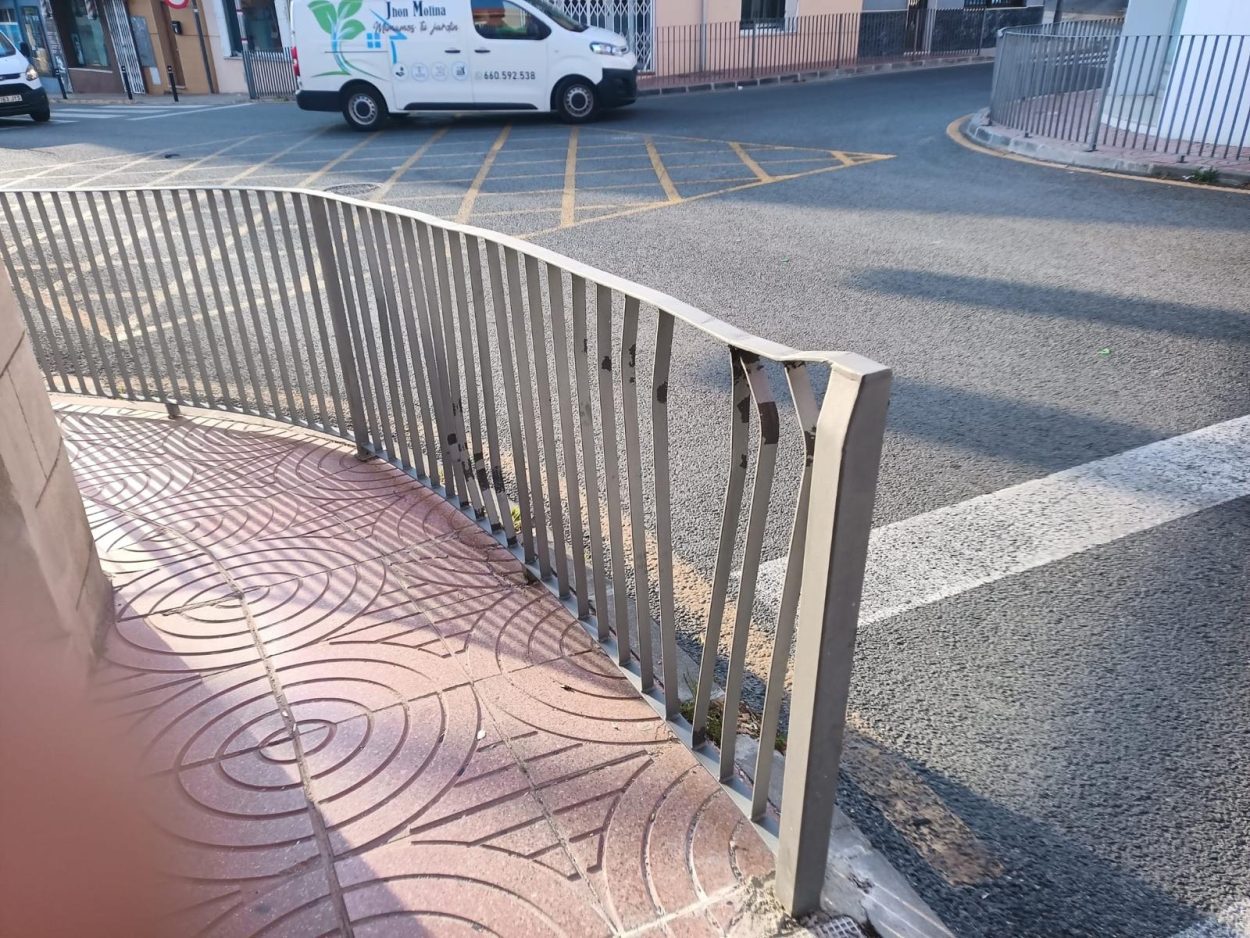
The Council and the Diputación of Alicante have been implementing safety and traffic calming measures in recent years, such as traffic lights, widening pavements, installing railings, speed bumps, road markings and increasing vertical and horizontal signalling. However, these measures have been shown to be insufficient.

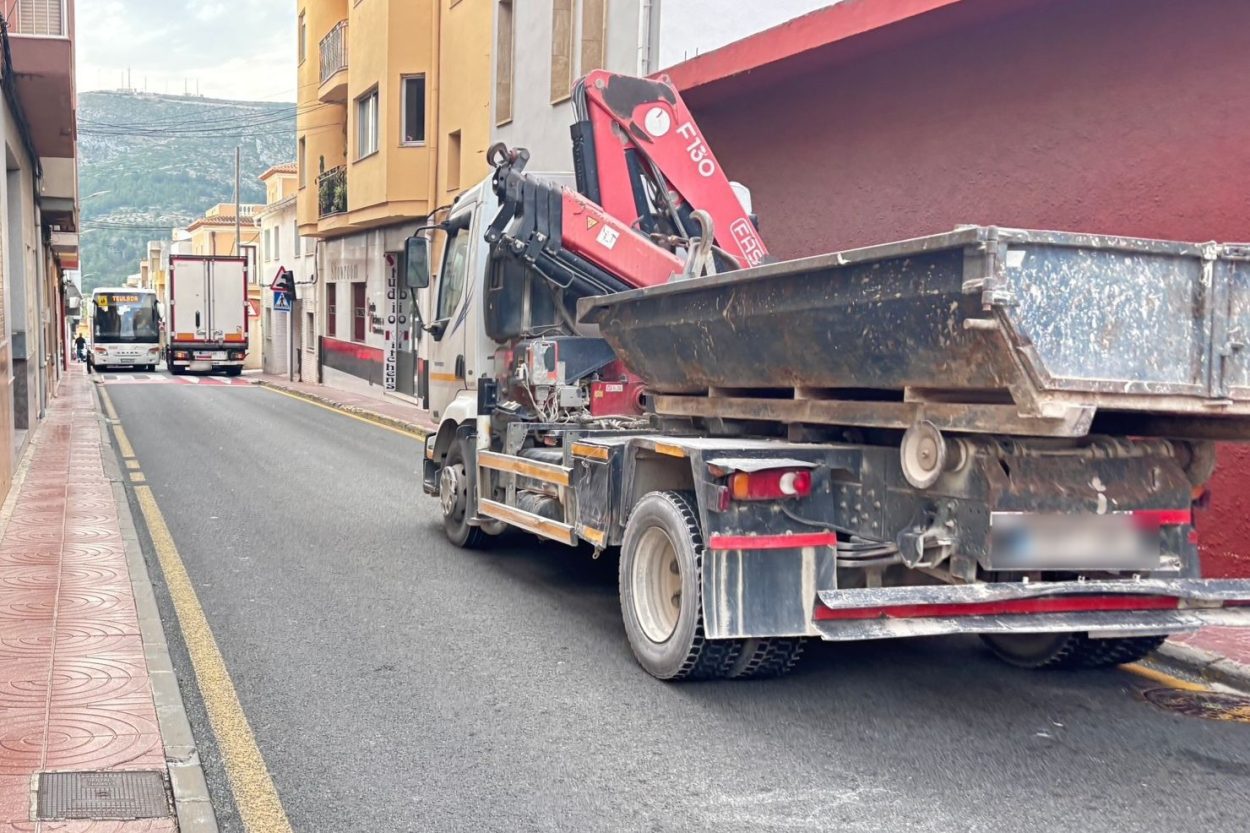
For more than two years, the Council has been working in technical coordination with the Provincial Council’s Roads Department on the design of a ring road to divert traffic away from the town centre. The project already has a defined route and economic assessment. The council has taken on the preliminary work and has shown its full willingness to collaborate in promoting this infrastructure. The Provincial Council itself, through its Roads Councillor, Arturo Poquet, has stated that Benitatxell is a technical priority within the set of provincial actions, confirming that there is full institutional awareness of the urgency and necessity of the project.
‘We know that this project is the number one priority for the entire province. We sincerely appreciate the willingness of both the responsible representative and the technical team at the Provincial Council, but a definitive push is needed to turn this project from a mere idea into a tangible reality as soon as possible,’ said the mayor, Miguel Ángel García, who expressed his concern about several recent incidents. «A provincial road cannot continue to run through the heart of the town with such narrow streets and pavements. The problem has become too serious. Urgent action is needed to prevent irreversible consequences. We cannot afford any more delays. It is essential that funding is provided and the bypass is built. We are fully confident that the Diputación of Alicante will rise to the challenge and take the necessary steps to implement this infrastructure, which is absolutely essential for Benitatxell. Action cannot be delayed any longer,» he stressed.